

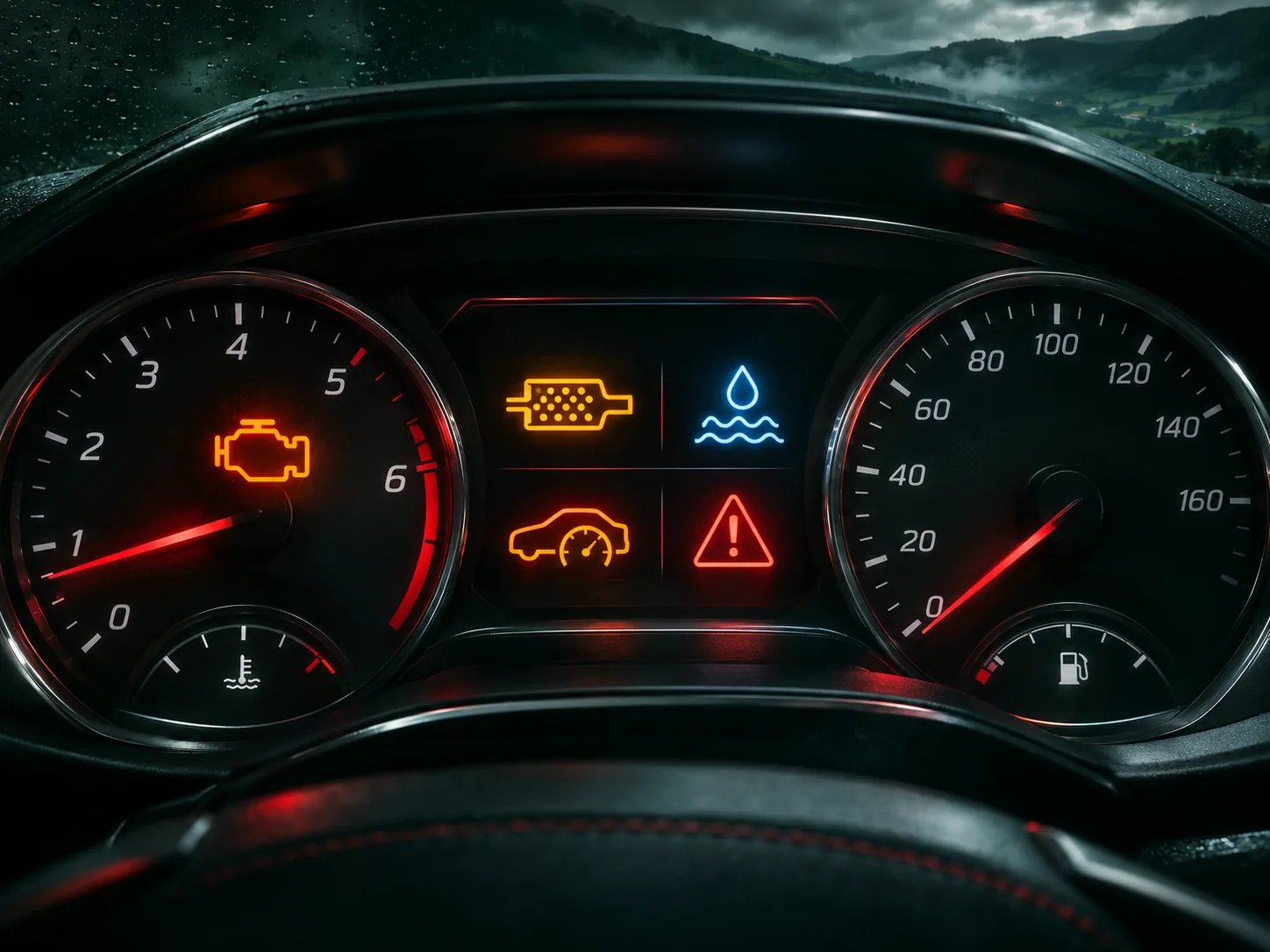
Warning-light diagnostics
Engine Warning Light
Engine management light on, uneven idling, hesitation or misfire? An amber dashboard warning can have several causes.
Learn More & EnquireVehicle diagnostics · Lancaster & Lancashire
Engine warning lights, fault codes, limp mode, DPF, EGR, AdBlue and ECU communication problems.
Looking for car fault diagnostics in Lancaster or trying to understand an OBD-II trouble code? Bowland Remapping helps drivers identify likely causes, arrange appropriate testing and choose a sensible, road-legal next step.
Mobile visits where suitable · Lancaster workshop by appointment · Vehicle-specific diagnosis
What to do first
Different warning lights need different action. If in doubt, stop safely and follow your vehicle handbook.
If the car behaves normally, avoid hard driving and arrange diagnosis promptly. Stop if symptoms worsen.
May signal serious misfiring and damage risk. Stop in a safe place as soon as possible and arrange assistance.
An SCR fault can restrict engine restarting. Do not ignore the warning; diagnose it before the countdown ends.
Interactive fault-code finder
Enter an OBD-II or ECU communication code to see its usual meaning, potential causes and what to check next.
Covers more than 35 illustrative codes below. Manufacturer-specific meanings may differ; a code is a clue, not a confirmed diagnosis.
We do not have a specific explanation for that code in this quick reference. Check the exact code and vehicle model. We can discuss the correct manufacturer-specific diagnostic procedure.
Understand the symptoms
Searches such as “engine management light on”, “car in limp mode” and “ECU no communication repair” can describe very different underlying problems. Start with the symptom and use a proper diagnosis before choosing parts or repairs.
Engine management light on, uneven idling, hesitation or misfire? An amber dashboard warning can have several causes.
Learn More & Enquire
Restricted diesel particulate filter, frequent regenerations, increased soot load or DPF pressure faults.
Learn More & Enquire
No-start countdown, AdBlue warning, reductant pressure issues or NOx sensor and SCR efficiency faults.
Learn More & Enquire
Rough idle, hesitation, smoke or insufficient/excessive EGR flow. Check the valve and related system.
Learn More & Enquire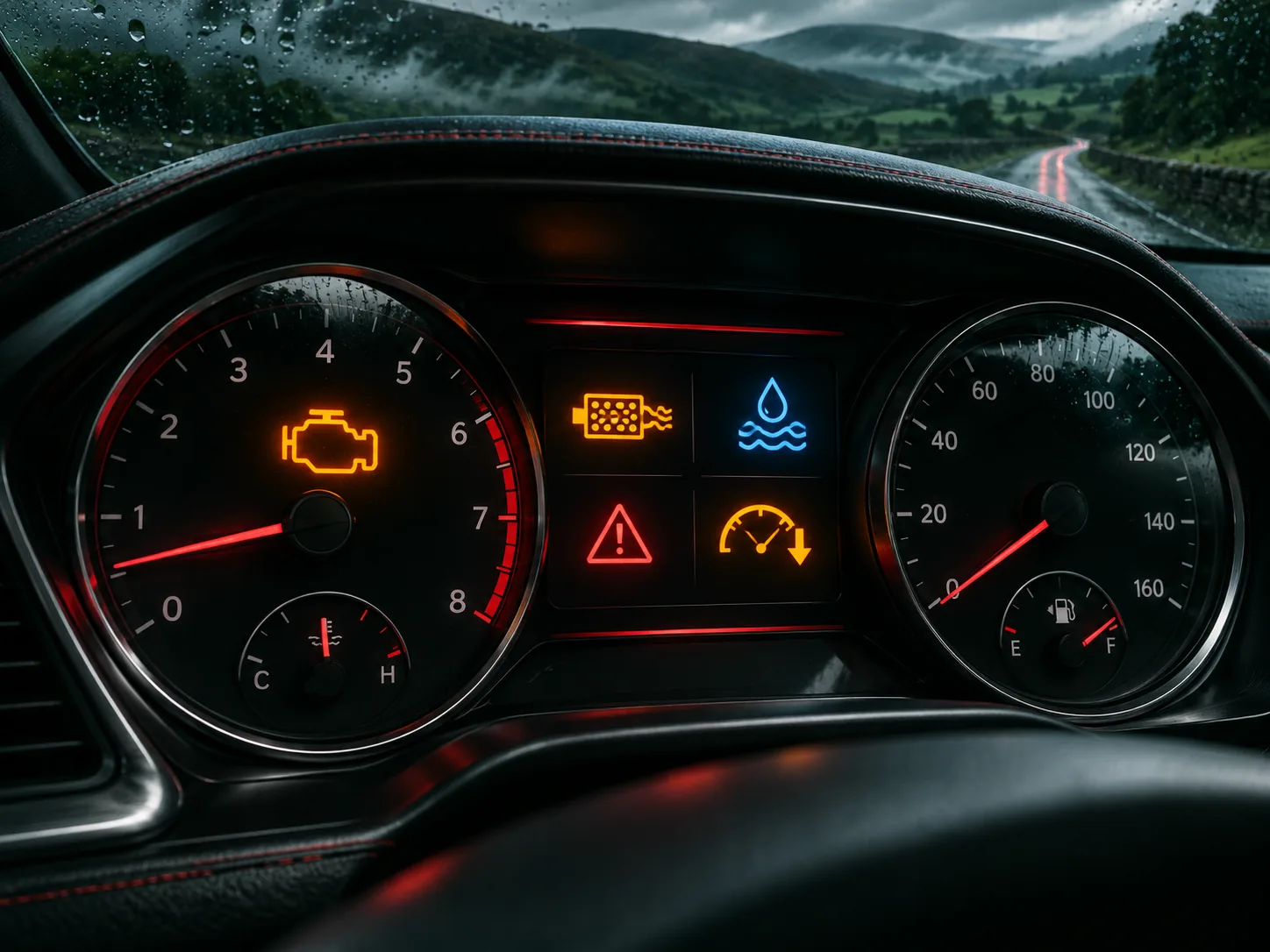
Loss of power, reduced engine performance or boost regulation faults. Underboost is not proof the turbo has failed.
Learn More & Enquire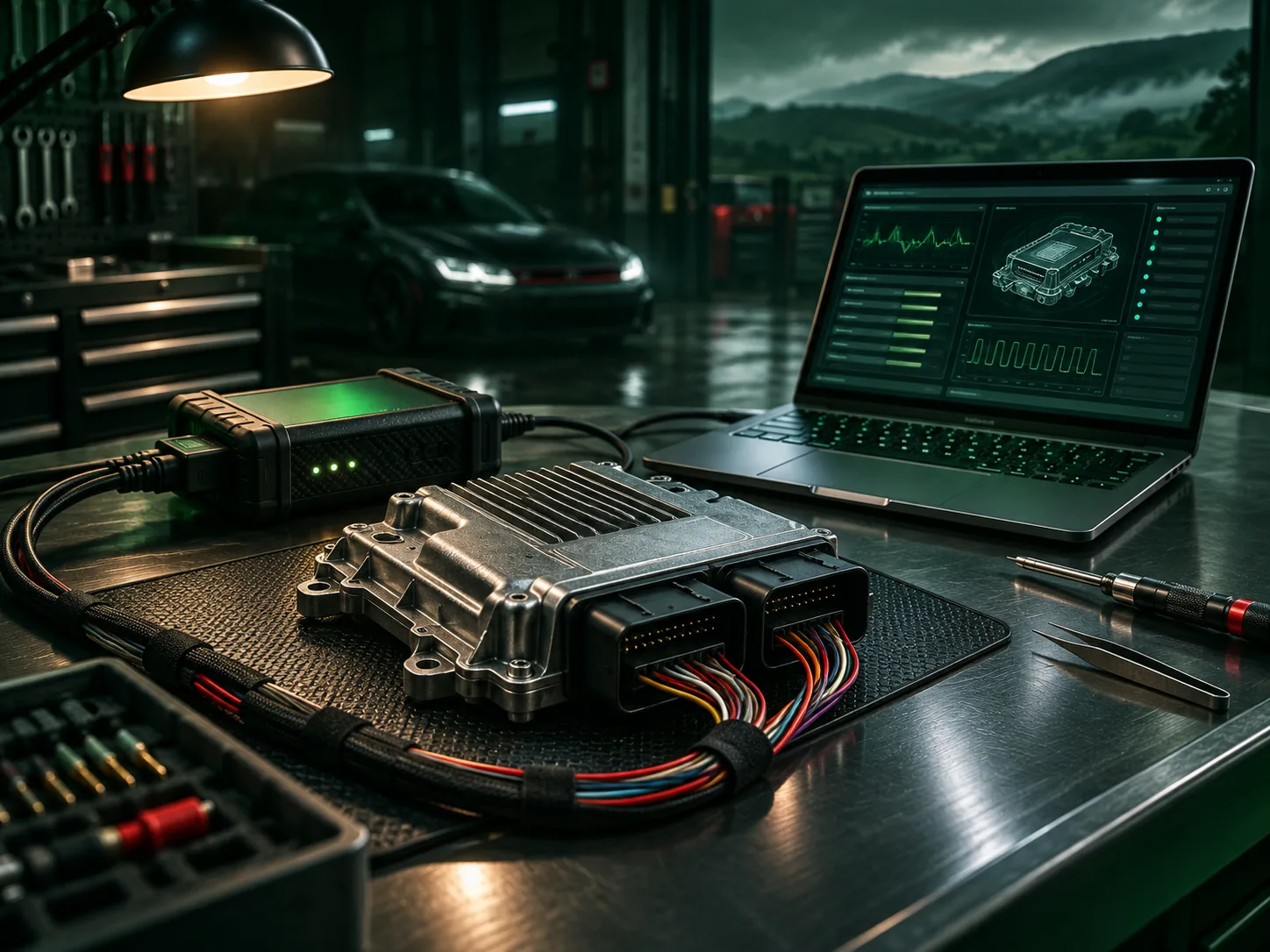
ECU / PCM processor errors, missing module communication, CAN issues and electrical supply faults.
Learn More & EnquireRoot-cause investigation
A stored DTC tells you what the vehicle's control system detected. It rarely proves that a particular component is defective. Swapping parts based only on a scan can be expensive and may leave the real problem unresolved.
We assess the available codes, freeze-frame information, live sensor data, electrical supply and relevant systems to help identify what should be tested or repaired next.
P0606, P0601, U0100 and U0101 can indicate issues that require power-supply and network checks before a control unit is condemned.
MAF, MAP, temperature, boost and oxygen-sensor codes need checks against actual operation and wiring conditions.
DPF, EGR and SCR/AdBlue codes require diagnosis of the complete system, including sensors, fluid delivery and exhaust condition.
Indexable OBD-II reference
Find the meaning of common P-codes, U-codes and selected manufacturer-specific faults. Use the search above for detail, or filter the table by system below. Definitions are general guidance only.
| Code | System | Usual meaning |
|---|---|---|
| P0299 | Turbo / boost | Turbocharger or supercharger underboost |
| P0234 | Turbo / boost | Turbocharger or supercharger overboost |
| P0101 | Air intake | Mass air flow sensor range or performance |
| P0102 | Air intake | Mass air flow sensor circuit low input |
| P0106 | Sensors | MAP / barometric pressure sensor range or performance |
| P0113 | Sensors | Intake air temperature sensor circuit high input |
| P0128 | Cooling | Coolant thermostat operating below regulating temperature |
| P0130 | Oxygen sensor | O2 sensor circuit fault (Bank 1 Sensor 1) |
| P0171 | Fuel mixture | System too lean (Bank 1) |
| P0174 | Fuel mixture | System too lean (Bank 2) |
| P0201 | Injector | Cylinder 1 injector circuit malfunction |
| P0300 | Engine misfire | Random or multiple cylinder misfire detected |
| P0301 | Engine misfire | Cylinder 1 misfire detected |
| P0340 | Engine timing | Camshaft position sensor circuit malfunction |
| P0401 | EGR system | Exhaust gas recirculation flow insufficient |
| P0402 | EGR system | Exhaust gas recirculation flow excessive |
| P0420 | Catalyst | Catalyst efficiency below threshold (Bank 1) |
| P2002 | DPF system | Diesel particulate filter efficiency below threshold (Bank 1) |
| P2003 | DPF system | Diesel particulate filter efficiency below threshold (Bank 2) |
| P2452 | DPF sensors | Diesel particulate filter pressure sensor circuit fault |
| P2453 | DPF sensors | Diesel particulate filter pressure sensor range / performance |
| P2463 | DPF system | Diesel particulate filter soot accumulation |
| P244A | DPF sensors | Diesel particulate filter differential pressure too low (Bank 1) |
| P20EE | SCR / AdBlue | SCR NOx catalyst efficiency below threshold (Bank 1) |
| P204F | SCR / AdBlue | Reductant system performance |
| P2200 | SCR / AdBlue | NOx sensor circuit malfunction (Bank 1) |
| P2201 | SCR / AdBlue | NOx sensor range / performance (Bank 1) |
| P229F | SCR / AdBlue | NOx sensor range / performance (Bank 1 Sensor 2) |
| P20E8 | SCR / AdBlue | Reductant pressure too low |
| P0606 | ECU / PCM | ECM / PCM processor fault reported |
| P0601 | ECU / PCM | Internal control module memory checksum error |
| P062F | ECU / PCM | Internal control module EEPROM error |
| U0100 | CAN / communication | Lost communication with ECM / PCM |
| U0101 | CAN / communication | Lost communication with transmission control module |
| U0121 | CAN / communication | Lost communication with ABS control module |
| U3000 | Manufacturer-specific | Control module fault — exact definition varies by manufacturer |
| B2000 | Manufacturer-specific | Body / airbag module fault — definition varies by vehicle |
Reference only. Certain U/B codes and precise manufacturer descriptions vary by vehicle. Full diagnostic checks are required.
37 example codes listed
DPF · EGR · SCR / AdBlue
DPF problems relate to diesel particulate filtration, soot load, regeneration and pressure sensing. AdBlue/SCR faults relate to reducing NOx emissions, including fluid dosing and NOx monitoring. EGR faults concern recirculated exhaust flow and valve operation.
The warning lights may look similar and several systems can affect engine performance or put the vehicle into limp mode. Determining which system failed requires live measurements and vehicle-specific checks, not simply clearing a code.
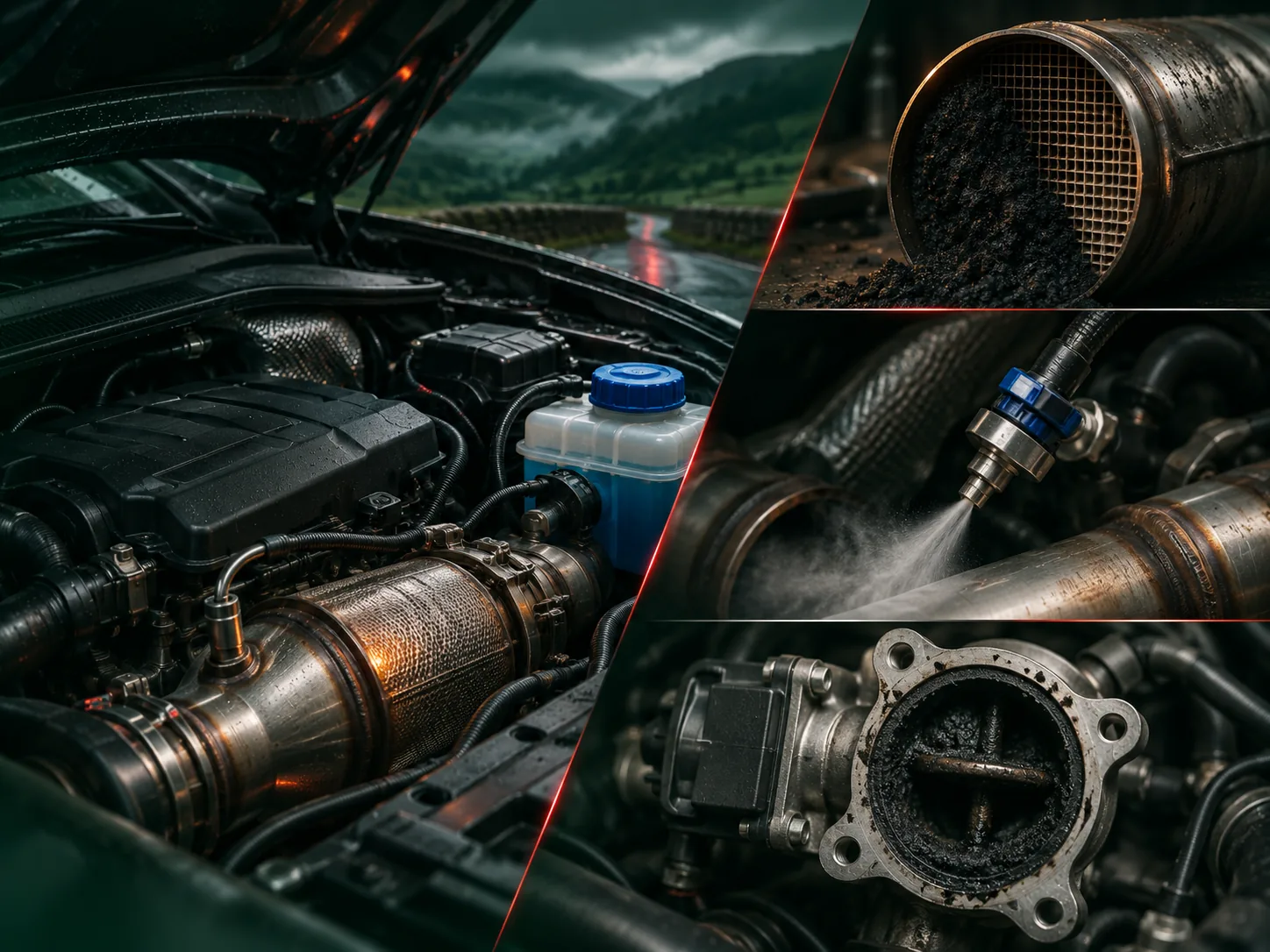
A DPF may need sensor or exhaust checks, suitable regeneration or cleaning, while SCR faults may require pump, injector, wiring, tank, NOx sensor or catalyst investigation. EGR valves may need cleaning or replacement where appropriate.
Removing or disabling factory emissions controls can make a road vehicle unlawful to use and can affect its MOT. We focus on diagnosing faults and discussing lawful options. Read DVSA's DPF guidance.
A clear diagnostic process
From your first message to a sensible repair recommendation, every stage depends on the vehicle's symptoms, the equipment required and the findings.
Send your registration, vehicle model, warning lights, fault codes and postcode.
We confirm the appropriate diagnostic route, suitability and a quotation.
Read modules, review live data and perform relevant checks where accessible.
Discuss repair priorities, likely next steps and further work if needed.
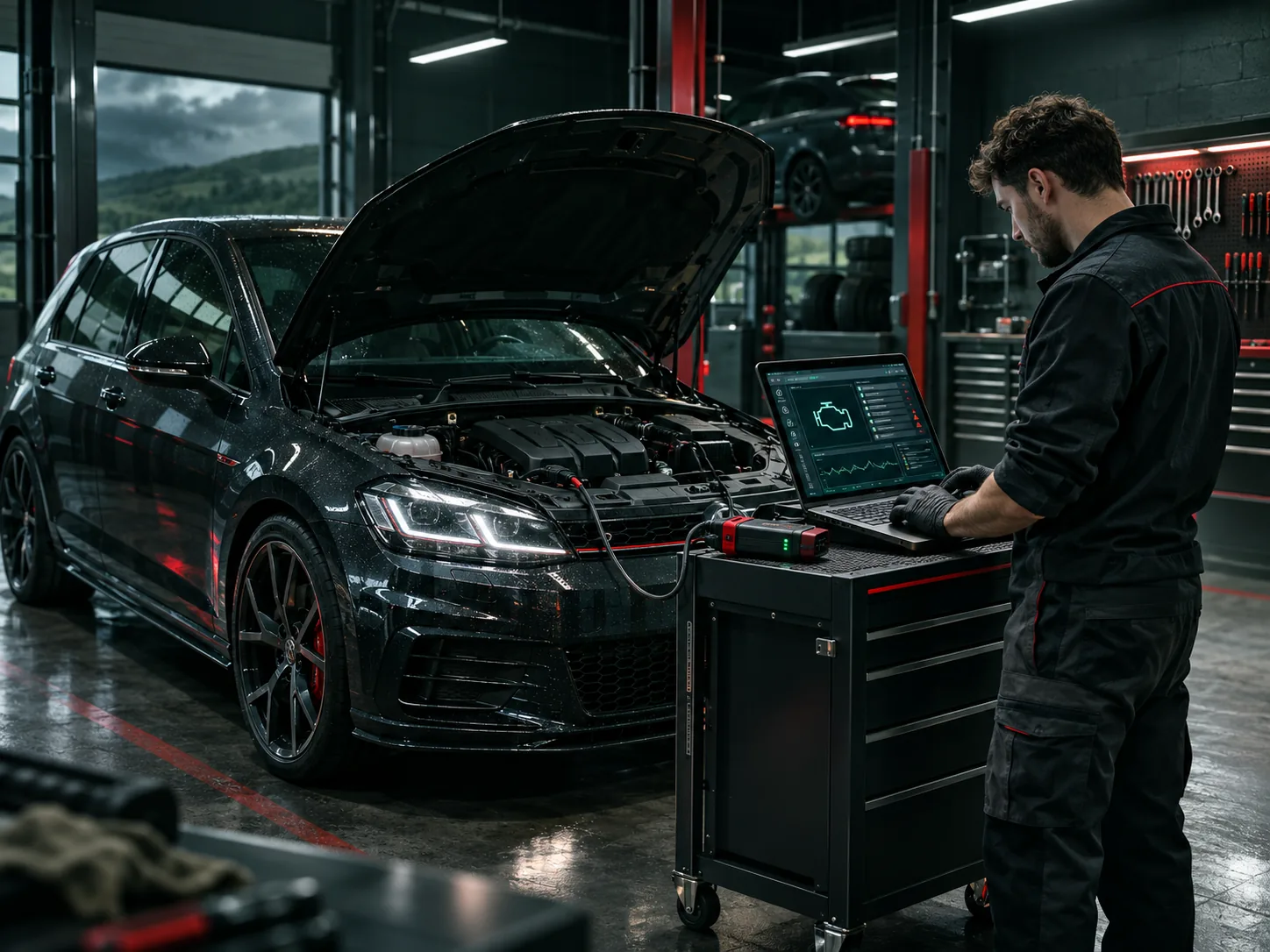
The price depends on vehicle access, number of systems, fault complexity, testing and whether mobile or workshop equipment is needed. Contact us for a quote before booking.
Two ways to get help
We can discuss a mobile visit where conditions are suitable, or arrange workshop diagnostics for more involved faults and ECU / TCU electronic issues. Appointments are by arrangement.
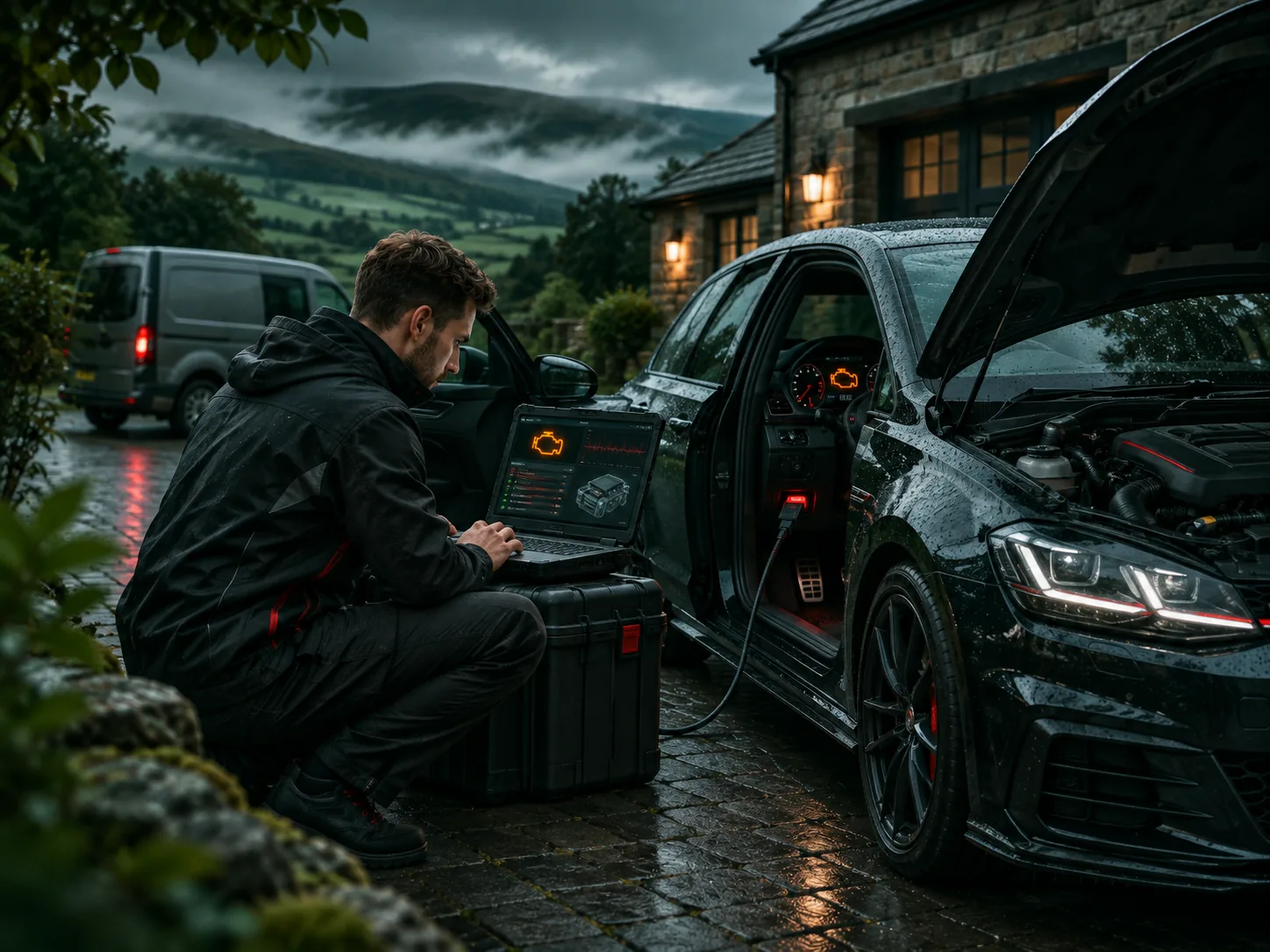
Across selected Lancashire areas
Convenient checks at your home or workplace when vehicle access, safety and diagnostic requirements allow.
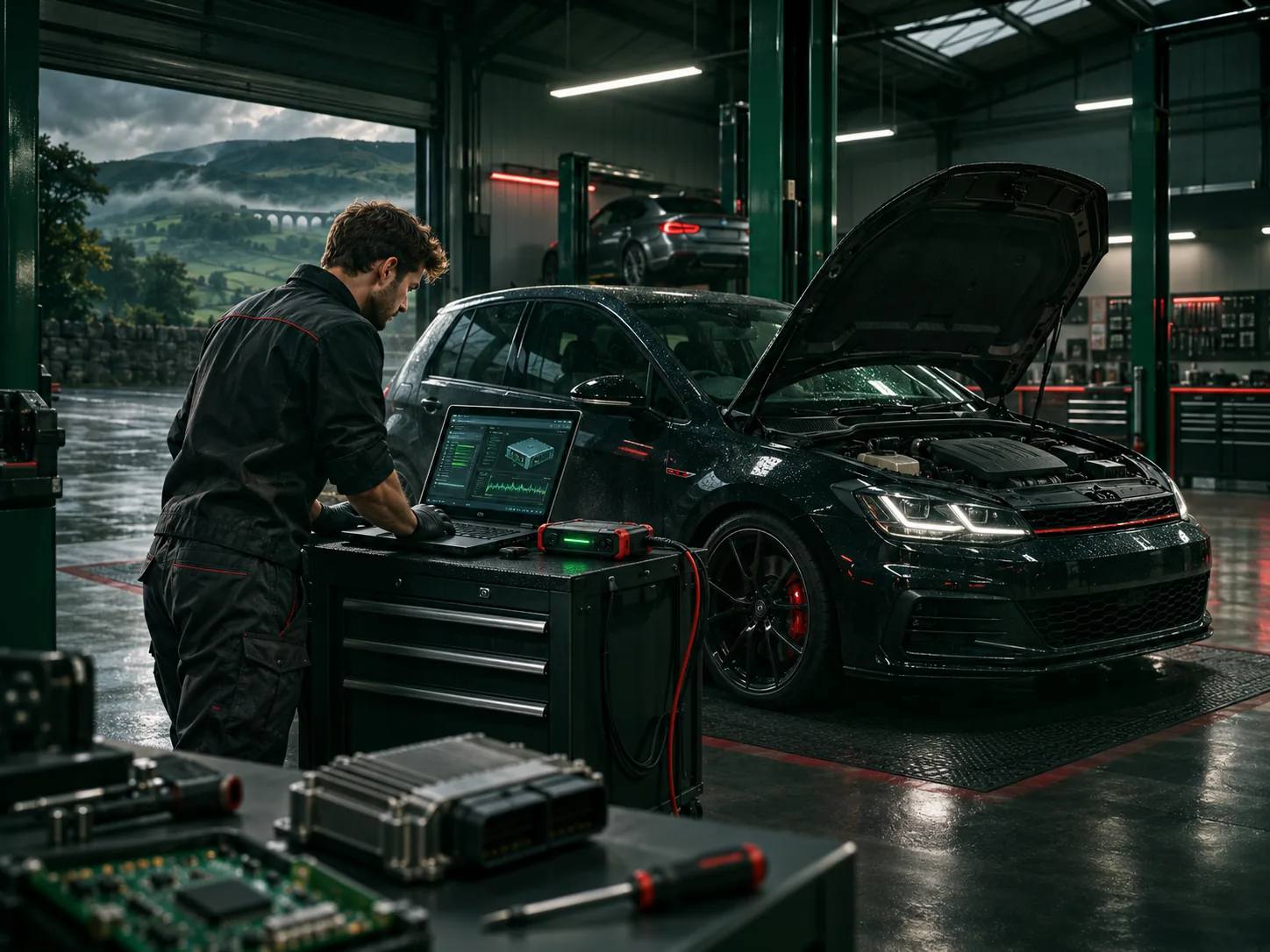
Workshop appointments
Garage-based diagnosis for vehicles needing additional testing, access or more involved electrical investigation.
ECU / TCU / vehicle electronics
Not every drivetrain warning is an engine ECU problem. Transmission control modules (TCUs), CAN communication, automatic gearboxes, sensors and body modules can all affect how a vehicle behaves.
We also handle enquiries for gearbox cloning and remapping, and our associated business Bowland Autotech handles specialist vehicle electronics enquiries. We will advise what type of assessment is appropriate.
For performance upgrades, see DSG & S tronic Tuning or BMW ZF xHP Tuning; a tune is not a substitute for fixing a mechanical or electronic fault.
Local vehicle fault diagnostics
Bowland Remapping is based around Lancaster, with selected mobile diagnostic and ECU remapping appointments across nearby Lancashire and southern Cumbria communities. Service availability depends on your location and the work required.
Need help elsewhere? Send your postcode. We will check whether a visit or garage appointment is suitable.
Questions drivers ask
Straight answers to popular questions about warning lights, DPF faults, AdBlue no-start messages, ECU repairs, diagnostic prices and MOT considerations.
The ECU has detected a fault or operating condition outside expected parameters. Causes range from loose connections or sensors to misfires, boost control, emissions-system faults or ECU communication problems. A diagnostic scan followed by tests is needed to identify the cause.
A steady amber light may allow cautious travel to a safe place or a garage if the car drives normally, but it should be checked promptly. If the car runs roughly, overheats, loses power suddenly or shows red warnings, stop safely and seek assistance. Follow the vehicle handbook.
A flashing engine management light can indicate a serious misfire that risks catalytic-converter or engine damage. Reduce load, stop in a safe place as soon as practicable and arrange recovery or professional assistance rather than continuing to drive.
Limp mode is a reduced-power operating strategy triggered by certain faults. Potential causes include boost-control issues, DPF restriction, EGR faults, sensor failures and transmission faults. The stored trouble codes and live data guide the diagnosis.
No. P0299 indicates an underboost condition. Split boost hoses, intake leaks, pressure sensors, actuators and turbo control faults can produce the same code. Pressure and live-data testing should come before replacing a turbocharger.
P0401 normally means insufficient exhaust gas recirculation flow. Carbon deposits, a sticking valve, blocked passages or sensor issues may be responsible. Cleaning or repair may be appropriate after inspection; the correct approach depends on the vehicle.
P2002 relates to DPF efficiency below threshold, while P2463 indicates excessive soot accumulation. Related sensors, pressure hoses, exhaust leaks and incomplete regeneration can contribute. Forced regeneration is not always appropriate or safe without checks.
A vehicle may restrict restarting after a set distance or number of starts when an SCR / AdBlue system issue is detected. Low or poor-quality fluid, pressure faults, NOx sensors and dosing problems are among the possible causes. Arrange diagnosis before the countdown reaches zero.
These codes relate to SCR performance and the reductant system. We can discuss vehicle-specific diagnostics and lawful repair options, including checks of pressure, dosing, NOx sensor data, wiring and exhaust-system condition.
No. U0100 reports lost communication with the engine control module. A blown fuse, low voltage, missing power or ground, damaged wiring or network issue can cause the same fault. ECU replacement should follow proper checks.
Sometimes. Depending on the module and fault, inspection, programming, data transfer, cloning or specialist electronics repair may be possible. An initial diagnosis is needed to decide whether an ECU-related fault is internal to the unit.
Clearing a stored fault only removes the record and may reset warning lights temporarily. Unless the underlying cause has been resolved, the fault can return. Clearing codes before diagnosis may also erase useful freeze-frame information.
An illuminated engine malfunction indicator lamp can be an MOT defect where the lamp is required to be checked. Other emissions-control faults and missing or altered equipment can also affect MOT compliance. The result depends on the fault and vehicle.
Mobile diagnostic visits may be available in Lancaster, Morecambe, Halton, Carnforth, Heysham and selected Lancashire areas where the vehicle and working conditions are suitable. Some investigations require a workshop appointment.
The quotation depends on the vehicle, symptoms, fault codes, location and the testing required. Send your vehicle registration, fault information and postcode for a vehicle-specific quote; an initial code scan and advanced diagnostic investigation are different levels of work.
Usually not. A performance remap is not a substitute for diagnosing a faulty sensor, turbo, injector, DPF, EGR or SCR system. Faults should be assessed first; software changes are considered only when appropriate and lawful.
Yes. Send your registration, vehicle make/model, a photo of the dashboard and any codes you have through WhatsApp. We can advise on booking the right type of diagnostic assessment.
We handle enquiries for a wide range of cars and vans including BMW, Audi, Volkswagen, Mercedes-Benz, Land Rover, Jaguar, Ford, Peugeot, Citroën and Vauxhall. Diagnostic availability and module support depend on the vehicle and equipment.
Information is general and does not replace qualified inspection, manufacturer guidance or roadside safety advice. All servicing and repairs must follow applicable UK road-use and emissions laws.
Bowland Remapping · Lancaster & Lancashire
Tell us what your vehicle is doing and send your registration, diagnostic codes and postcode. We'll help you choose a suitable diagnostic appointment and discuss the next steps.