

Is a Stage 1 remap safe?
A sensible calibration may suit a healthy vehicle, but no modification is risk-free. Mechanical condition comes first.
Read the full answer →
Lancaster & Lancashire • Car & van tuning
Straight answers about Stage 1 and Stage 2 tuning, engine safety, MOT rules, insurance, remap costs, DPF faults and gearbox software. Written for drivers across Lancaster and Lancashire.
Browse by topic
Choose a subject or use the live search to narrow down the questions.
Start here
Quick answers first, with in-depth explanations further down this page.
A sensible calibration may suit a healthy vehicle, but no modification is risk-free. Mechanical condition comes first.
Read the full answer →Eligible services are advertised from £149; the actual price is quoted for your engine, ECU and requirements.
Read the full answer →Declare ECU and other vehicle modifications to your insurer before driving the modified car.
Read the full answer →It can, provided the vehicle still meets all applicable emissions, safety and warning-light requirements.
Read the full answer →
8 practical answers
Power, torque and everyday driving: what ECU software can and cannot change.
ECU remapping changes selected calibration settings in the engine control unit, which manages functions such as fuel delivery, boost pressure, ignition timing and torque requests. The aim may be better mid-range response, usable torque or improved driveability. The exact changes depend on the vehicle, ECU and engine condition; software cannot compensate for mechanical faults.
Stage 1 is generally an ECU calibration for a healthy vehicle with standard or largely standard hardware. Stage 2 is normally designed around specified supporting hardware and requires checking the entire setup. These are industry labels rather than regulated standards, so the work included can vary. We confirm a suitable option for your specific engine before tuning.
There is no universal percentage or horsepower figure. Turbocharged petrol and diesel engines often have more scope for a measurable increase than some naturally aspirated engines. Actual results depend on engine variant, original calibration, modifications, fuel, maintenance and testing conditions. Figures in vehicle lookup tools are estimates, not guarantees.
For a well-maintained, compatible vehicle, a sensible Stage 1 calibration may improve usable torque and throttle response without making the car difficult to drive in traffic. The priority should be predictable power delivery and vehicle reliability, not simply the highest possible headline figure. We discuss the intended use before recommending a file.
It can in some driving conditions, particularly when a suitable calibration improves low- and mid-range torque and the driver maintains a gentle driving style. Fuel savings are not guaranteed; faster acceleration, heavier loads, journey type and traffic can increase consumption. We would not quote a fixed MPG improvement without testing your vehicle.
A remap can adjust torque requests and response characteristics on supported vehicles, which may make acceleration feel more immediate. The result depends on the turbocharger, gearbox, engine hardware and existing calibration. Software cannot remove all turbo lag or solve faults such as leaks, sticking actuators or failing sensors.
Many supported diesel vans and tow vehicles can be assessed for economy-oriented or torque-focused tuning. Cooling, clutch and gearbox capacity, towing weights and maintenance matter, especially for vehicles frequently operating under load. We avoid promising extra towing capacity: the vehicle must remain within its manufacturer-rated limits.
Some naturally aspirated engines support calibration changes, but the power gains may be modest compared with turbocharged equivalents. A noticeable improvement might concern response rather than peak horsepower. Check your exact engine and ECU before assuming any gain or availability.
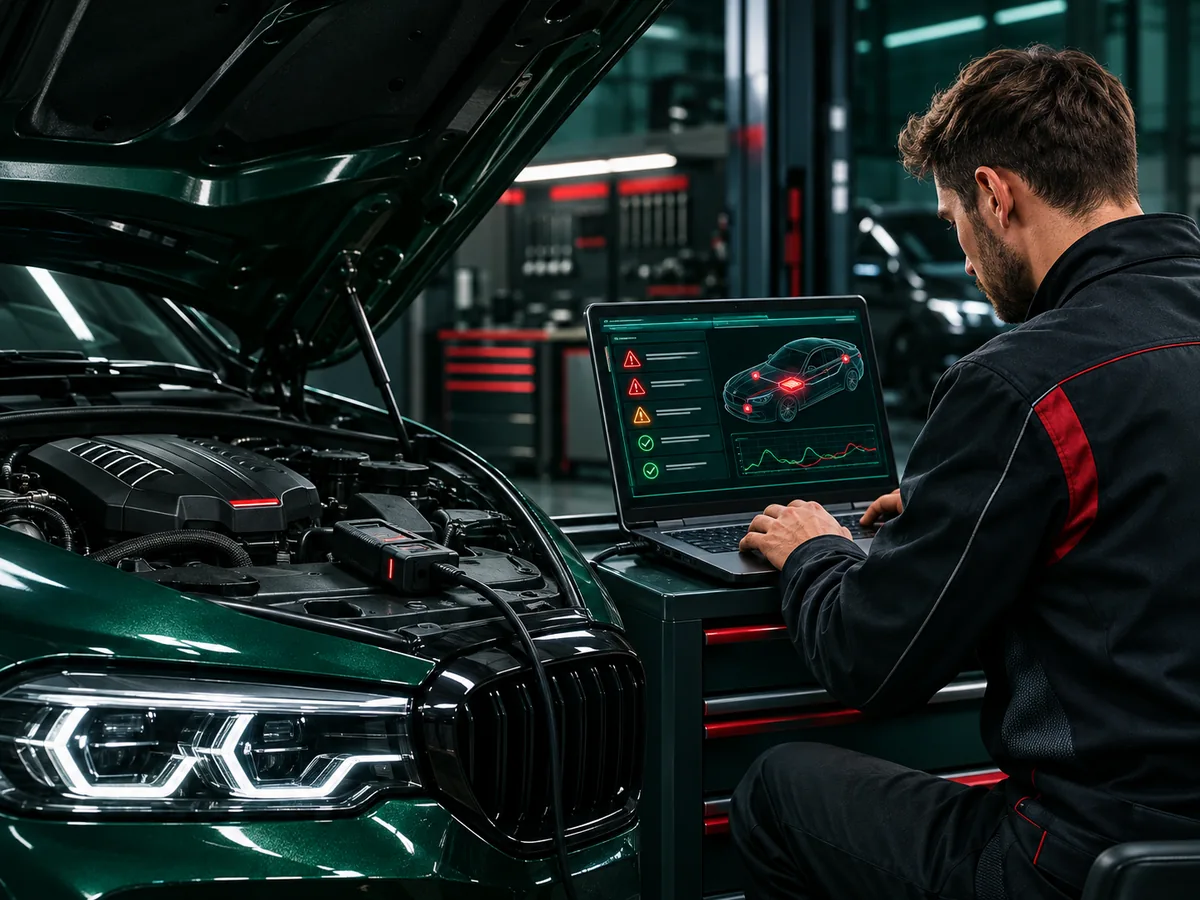
8 practical answers
Questions about engine health, maintenance, mileage and what happens before tuning.
A carefully chosen calibration for a mechanically healthy vehicle can be suitable, but no power modification is entirely without risk. Added torque or heat can increase stress on components. We consider faults, service history, hardware limitations and how the vehicle is used before recommending tuning.
Increasing performance can raise thermal and mechanical loads, so it may affect the lifespan of an already worn or heavily stressed component. Good servicing, suitable oil, sensible driving and a conservative calibration all matter. No reputable tuner should promise that the lifespan of every engine will be unchanged.
Mileage alone does not determine suitability. A high-mileage vehicle with strong service history and healthy mechanical systems may be a better candidate than a poorly maintained lower-mileage car. We may recommend checking boost control, leaks, cooling, clutch slip and fault history before proceeding.
It is wise to have routine maintenance up to date, including engine oil, filters and any manufacturer-recommended servicing. Existing issues such as misfires, coolant loss, abnormal smoke or slipping clutches should be diagnosed first. Tuning should not be used as a substitute for servicing or repairs.
Extra torque can reveal existing weakness in a manual clutch, dual-mass flywheel or automatic gearbox. We assess whether the requested torque is appropriate for the drivetrain and may suggest gearbox calibration where supported. If a clutch is already slipping, repair it before considering performance tuning.
We normally recommend diagnosing an active engine warning light before tuning. A stored trouble code may relate to a sensor, air leak, DPF, SCR system, wiring or a mechanical issue. Clearing a code or changing software without checking the cause is not a reliable repair strategy.
Vehicle-specific suitability matters because even apparently identical models can have different ECU software, transmissions, emissions equipment and hardware versions. The intended tuning approach is selected for the vehicle and its current condition. We do not promise an identical outcome for every engine.
Where a suitable original calibration is available and the vehicle or ECU allows restoration, returning the vehicle to a standard software state can often be arranged. However, restoration is not the same as a guarantee of invisibility to a dealer, nor does it automatically reinstate a warranty. Ask before work begins about your specific ECU.

8 practical answers
UK road-use requirements, insurers, warranties and emissions-system rules.
ECU remapping is not inherently prohibited, but a modified car must remain roadworthy and comply with applicable vehicle, safety and emissions requirements. You should declare relevant modifications to your insurer. Software changes that defeat required emissions controls can make a road vehicle unlawful to use.
A remap does not automatically cause an MOT failure. The vehicle still needs to meet the applicable MOT requirements, including emissions, warning lights and the condition of fitted systems. A remap cannot guarantee a pass; existing faults or non-compliant modifications may cause a failure.
Yes, disclose an ECU remap or other relevant modification to your insurer and check how it affects cover, premium or terms. Some insurers offer cover for modified vehicles, while others may have restrictions. Keep confirmation of any policy change in writing before driving the modified car.
A remap can affect manufacturer, dealer or third-party warranty claims depending on the terms and the relationship between the modification and the claimed fault. Restoring the original file does not guarantee that a modification cannot be detected or that coverage will return. Check your specific warranty wording first.
Check the finance, lease or fleet agreement before making software changes, and obtain any required permission. A return-to-standard option may exist but does not replace contractual approval. Company vehicles may also have fleet insurance or maintenance conditions that restrict modifications.
Removing a diesel particulate filter that was fitted as standard can cause an MOT failure and make the vehicle unlawful for road use. If you have a DPF warning, proper diagnosis, cleaning where suitable, regeneration or repair should be considered. We do not present DPF removal as a normal road-car repair.
Disabling required AdBlue/SCR emissions equipment can result in a vehicle no longer complying with the rules that apply to it. Warning messages and no-start countdowns should be diagnosed to identify faults such as NOx sensors, dosing, wiring or fluid quality. Legal options depend on the vehicle and its intended use.
An EGR fault may result from a stuck valve, soot accumulation, wiring, sensors or airflow problems. Switching off required emissions functions can create legal and compliance issues for road use. The correct starting point is fault diagnosis and repair or replacement of defective components, as appropriate.

8 practical answers
Clear answers on vehicle checks, quotes, appointments and mobile tuning.
Bowland Remapping currently advertises eligible remapping services from £149. The final quote depends on make, model, ECU type, vehicle condition, software requirements and whether mobile or workshop access is suitable. Any diagnostic, travel or additional work is explained and agreed before proceeding.
Many straightforward, supported ECU remaps take roughly one to two hours once the vehicle is ready, but the actual time can be shorter or longer. Diagnostic checks, ECU access methods, software reading and writing, and verification all affect the appointment. We confirm expectations for your vehicle before booking.
Yes. Mobile ECU remapping is offered by arrangement in Lancaster, Morecambe, Halton, Heysham, Carnforth and selected surrounding areas. Suitability depends on the vehicle, equipment needed, location and working conditions. More involved ECU or gearbox work may require a workshop appointment.
Yes, garage appointments can be discussed for work better suited to a controlled workshop environment. Please contact us first for the appointment arrangements rather than arriving without a booking. We will confirm the service location and whether your particular vehicle can be worked on there.
Send your vehicle registration, make, model, engine, approximate year, postcode and your main aim, such as power, economy or smoother driving. Mention any existing remap, modifications or warning lights. These details help us assess compatibility and give a more meaningful vehicle-specific quotation.
The usual stages are vehicle and fault checks, confirmation of the agreed calibration, reading or accessing the ECU using a supported method, programming the software and checking relevant systems afterwards. The exact workflow varies by ECU and vehicle. We explain any additional work before carrying it out.
A diagnostic scan is strongly recommended to identify active faults that could make tuning unsuitable. Reading codes is only a starting point: some symptoms also require live-data checks or mechanical inspection. If a fault needs repair first, we will explain that rather than treating a remap as the fix.
Contact Bowland Remapping with your registration, postcode and preferred service. We will discuss availability and confirm the quotation and appointment details. If you need to reschedule, contact us as early as you can; the applicable booking terms will be explained when your work is agreed.
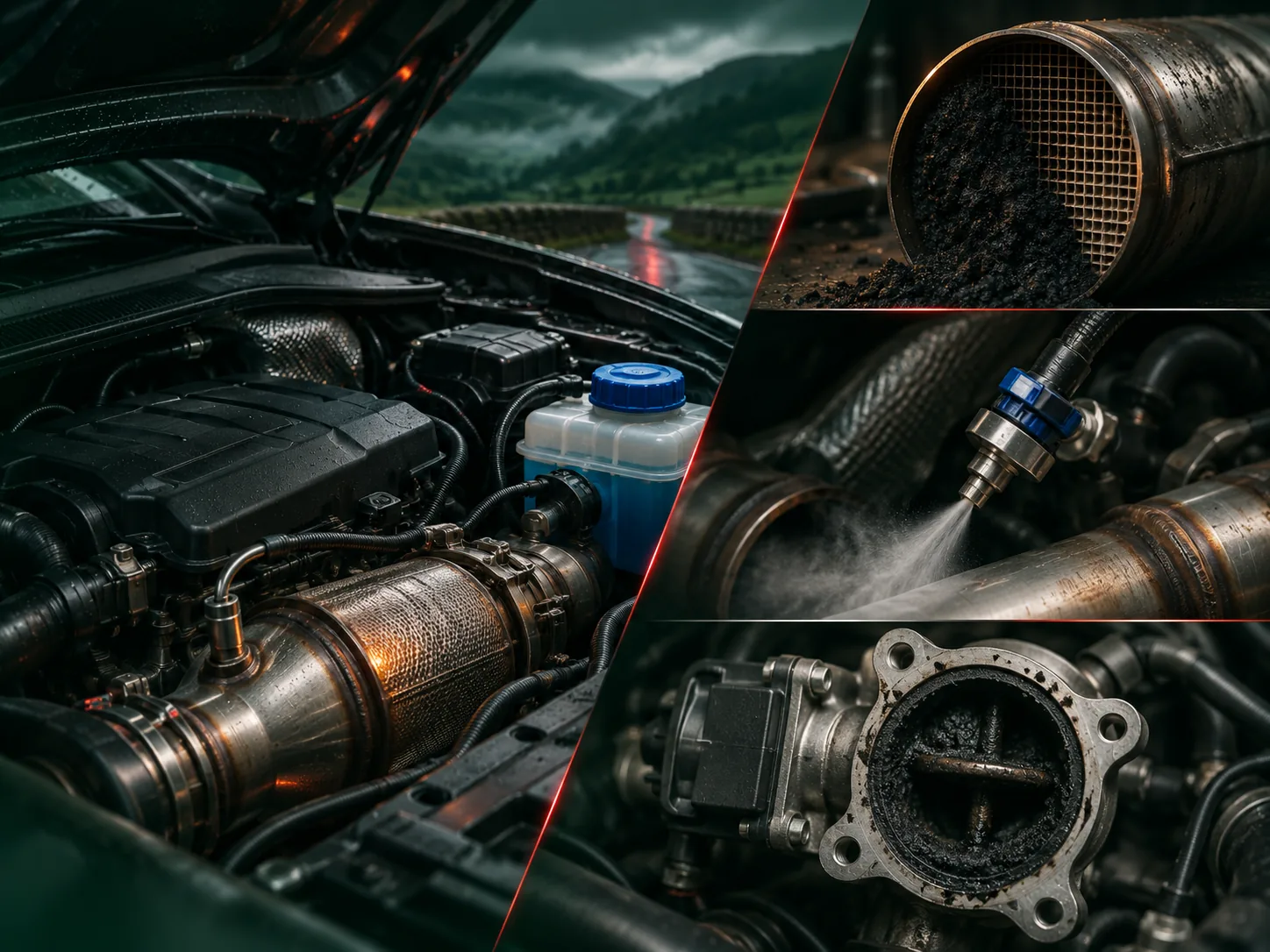
8 practical answers
Understand warning lights and the difference between diagnosing a fault and changing software.
A DPF warning may indicate excess soot loading, interrupted regeneration or an underlying pressure, temperature or sensor fault. The correct action depends on the vehicle and warning severity. Continuing to drive without diagnosing the cause can lead to reduced performance or further damage.
P2002 generally indicates diesel particulate filter efficiency below the expected threshold for bank 1. Possible causes include filter condition, exhaust leaks, pressure readings or other system faults. It does not prove that the filter alone needs replacing; testing is needed.
P2463 generally relates to excessive soot accumulation or restriction in the diesel particulate filter. Causes can include unsuccessful regeneration, incorrect pressure readings, short journeys or engine issues producing too much soot. A proper diagnosis should consider soot loading and the reason regeneration has failed.
A faulty EGR valve, restricted passages, failed position feedback, air leaks or sensor faults can trigger warning lights or limp mode. A scan may show codes such as P0401, but the code alone is not a complete diagnosis. A repair may involve cleaning, testing or replacement depending on findings.
P0401 commonly means insufficient exhaust gas recirculation flow. Possible causes include carbon build-up, a sticking EGR valve, leaks or inaccurate airflow measurements. Diagnostic checks are needed to distinguish a blocked path from an electrical or sensor issue.
An AdBlue/SCR no-start countdown can occur when the system detects a fault or a fluid-related issue. Possible causes include low or unsuitable fluid, NOx sensor faults, dosing-system problems, heaters or wiring. The vehicle should be checked promptly, before the countdown reaches zero.
P20EE generally relates to SCR NOx catalyst efficiency below threshold. A NOx sensor, AdBlue quality, dosing fault, exhaust leak or catalytic-system issue may be involved. Replacing a component without testing can be expensive and may not solve the problem.
An engine remap should not be treated as a repair for an unidentified warning light. First diagnose the fault and fix the cause where required. We can discuss tuning after the vehicle is suitable, or direct you to the Common ECU Faults guide for explanations of typical fault codes.
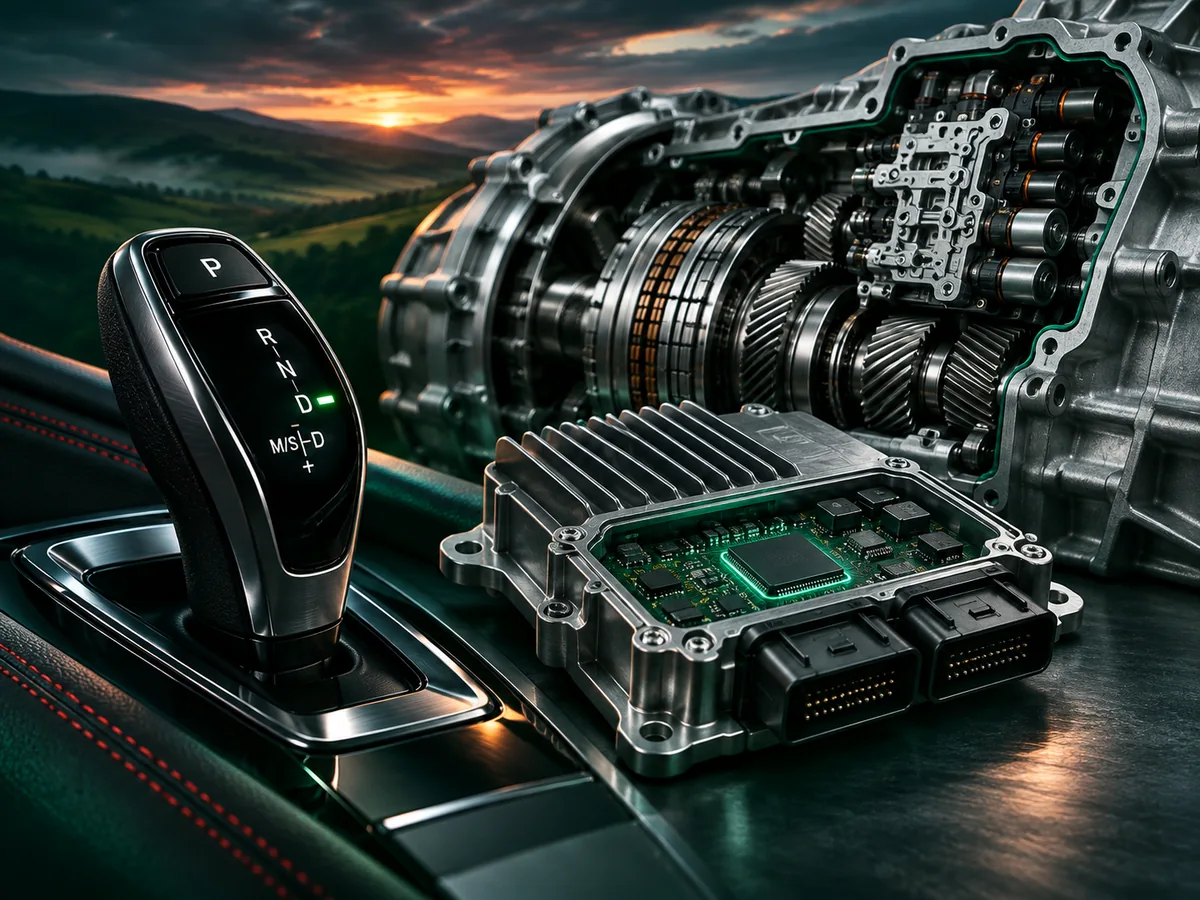
8 practical answers
Automatic gearbox tuning explained for supported BMW, Audi, VW, SEAT, CUPRA and Škoda vehicles.
Gearbox remapping changes supported transmission control-unit software settings, potentially affecting shift timing, gear selection strategy or torque management. The available functions depend on the transmission model and software version. It is not a physical repair for a worn or faulty gearbox.
DSG tuning refers to suitable transmission-control calibration for supported dual-clutch gearboxes used in Volkswagen Group vehicles. It may alter shift behaviour, torque limits or certain drive-mode characteristics. Compatibility differs between DQ200, DQ250, DQ381, DQ500 and other units, so the gearbox code matters.
Audi S tronic and Volkswagen DSG are related dual-clutch transmission names, but they cover several different hardware families and software configurations. A calibration suitable for one gearbox cannot simply be assumed correct for another. We check the exact transmission before quoting.
xHP is a transmission software platform used with certain supported BMW and other compatible ZF automatic gearboxes. Depending on the model and available functions, tuning may change shift character, manual-mode behaviour and torque management. Not every ZF 6HP or 8HP unit is supported in the same way.
On a compatible, healthy transmission a suitable calibration may change shift speed, shift points or driving-mode response. A more aggressive setup is not necessarily smoother in every situation. The best result depends on how you use the car and the condition of the gearbox.
Not always. Some cars have enough transmission torque capacity and a well-matched factory strategy for the planned engine tune. On others, supported TCU tuning may improve coordination or address calibration limits. We check the vehicle rather than recommending both services automatically.
No software tune should be promised as a cure for a slipping clutch, failing mechatronic unit, oil-pressure problem or mechanical wear. The fault should be diagnosed and repaired first. Some gearbox issues are software-related, but this must be demonstrated through proper checks.
We can discuss supported DSG and S tronic transmissions in Volkswagen Group cars and compatible ZF gearboxes such as those used in many BMW models. Availability depends on ECU/TCU identification and software access, and is not guaranteed by the vehicle badge alone. Send your registration or gearbox code for confirmation.
What to expect
A practical, vehicle-first process — not a promise of identical results for every car.
Send the registration, engine, postcode and your goals.
Confirm ECU compatibility and any faults that need addressing.
Choose the agreed tuning approach and program the ECU.
Check relevant systems and explain the completed work.
Vehicle-specific calibration. Responsible advice. Clear next steps.
Go deeper
Read about specific services before asking for a vehicle-specific quotation.
Local service
Bowland Remapping serves Lancaster, Morecambe Bay, the Fylde Coast, parts of the Ribble Valley and selected nearby areas. Mobile visits and garage appointments are subject to vehicle compatibility and booking availability.
Outside these areas? Ask us about your postcode.
Type your question and send it directly to our team via WhatsApp. No website form submission or reload.
WhatsApp opens with your question pre-filled. You choose whether to send the message.

Talk to a local specialist
Get a vehicle-specific answer about ECU remapping, gearbox tuning or a warning light. Tell us your registration and postcode for the most useful advice.
Information is general and not a substitute for vehicle-specific diagnostics, professional advice or current MOT, insurance and road-use requirements. Bowland Remapping is part of Bowland Autotech Ltd.